Mechanical systems · Design for manufacture
Package-reloading conveyor
A fabricated package-reloading conveyor for repeated robot-cell testing at Ambi Robotics, with flow prototyping and integrated jam detection.
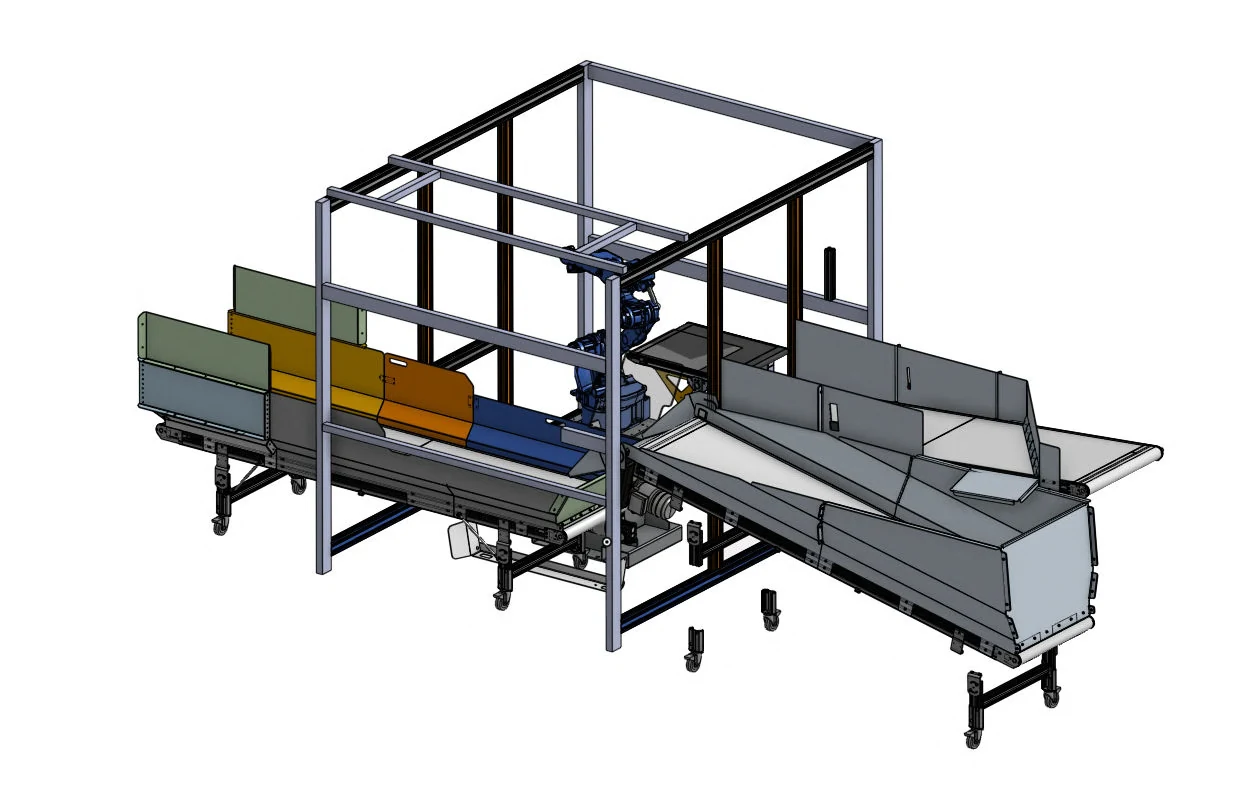
Onshape mechanical and sheet-metal design, package-flow prototyping, photoelectric sensing, and assembly for cycle-test handoff.
Overview: keeping the robot cell supplied
A robot development cell needs a repeatable supply of packages before the team can run useful cycle tests. During my mechanical engineering internship at Ambi Robotics, I designed and built the reloading conveyor for that setup. The goal was to keep the cell supplied across its different configurations so the team could spend its time testing the robot and collecting data.
I owned the mechanical design from layout through sheet-metal modeling and assembly, and worked on sensor integration and the basic reloading sequence. The design had to accommodate the cell’s different configurations as well as the unpredictable way real packages slide, settle, and stack.
Testing package flow before fabrication
There were two separate layout problems. CAD could answer whether the conveyor fit inside the cell and cleared the robot. It could not establish how a mixed set of real packages would settle or jam. I used simplified geometry for the first problem and scrap-wood prototypes for the second, testing the angle of repose and where packages accumulated before ordering fabricated parts.
The angle of repose describes how steeply a pile can sit before it moves. For this project, the useful question was whether packages continued toward the transfer point or formed a stable obstruction. Those observations guided the surface angles and assembly details. A low-cost mockup was valuable because a geometry change could be tried immediately.
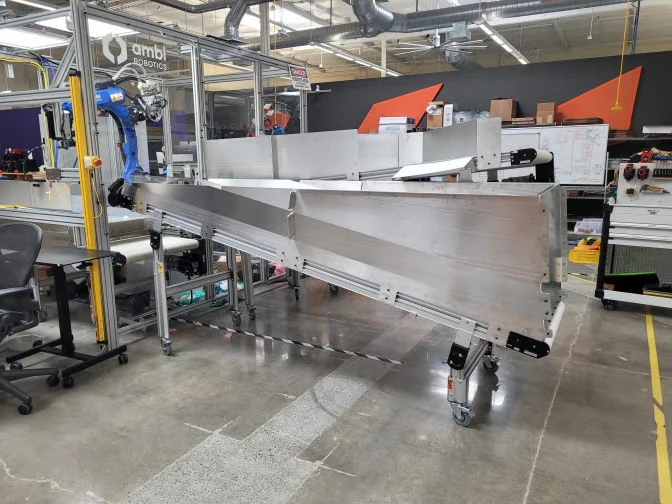
Designing for the press brake and the assembler
The Onshape sheet-metal design incorporated bend access and assembly sequencing. A sheet-metal part can be correct in its finished shape but impossible to bend in the intended order. An existing flange may block the press-brake tooling, or one assembled part may prevent access to the next fastener. I worked through those constraints while modeling the parts, rather than leaving the fabrication sequence to be resolved after ordering.
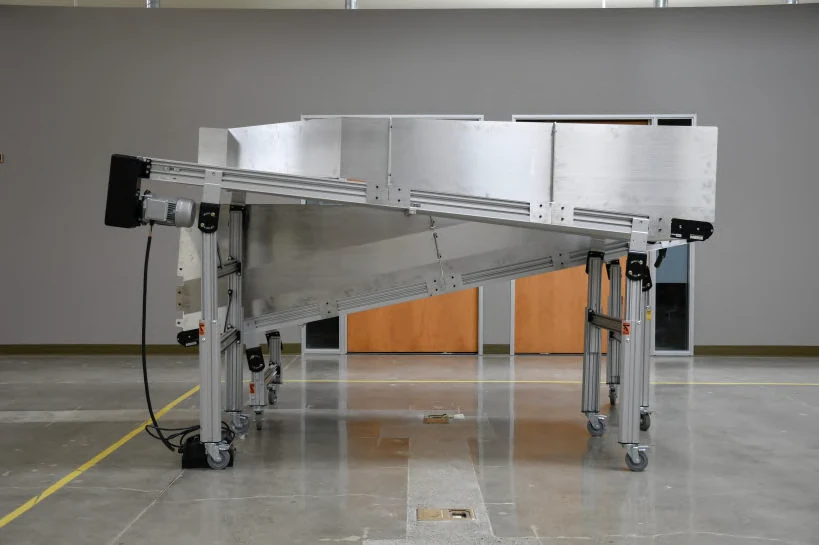
These constraints shaped the transfer surfaces, structural supports, and sensor locations before the parts were ordered.
Detecting a full conveyor or a jam
Integrated photoelectric sensors detect a full conveyor or jam condition. Those signals give the software team observable states to use in the reloading sequence. The system needs to know when it can accept another package and when feeding more material would make a blockage worse.
The assembled conveyor was handed to the software team for cycle testing on the robot cell, with the mechanical layout and sensing in place.